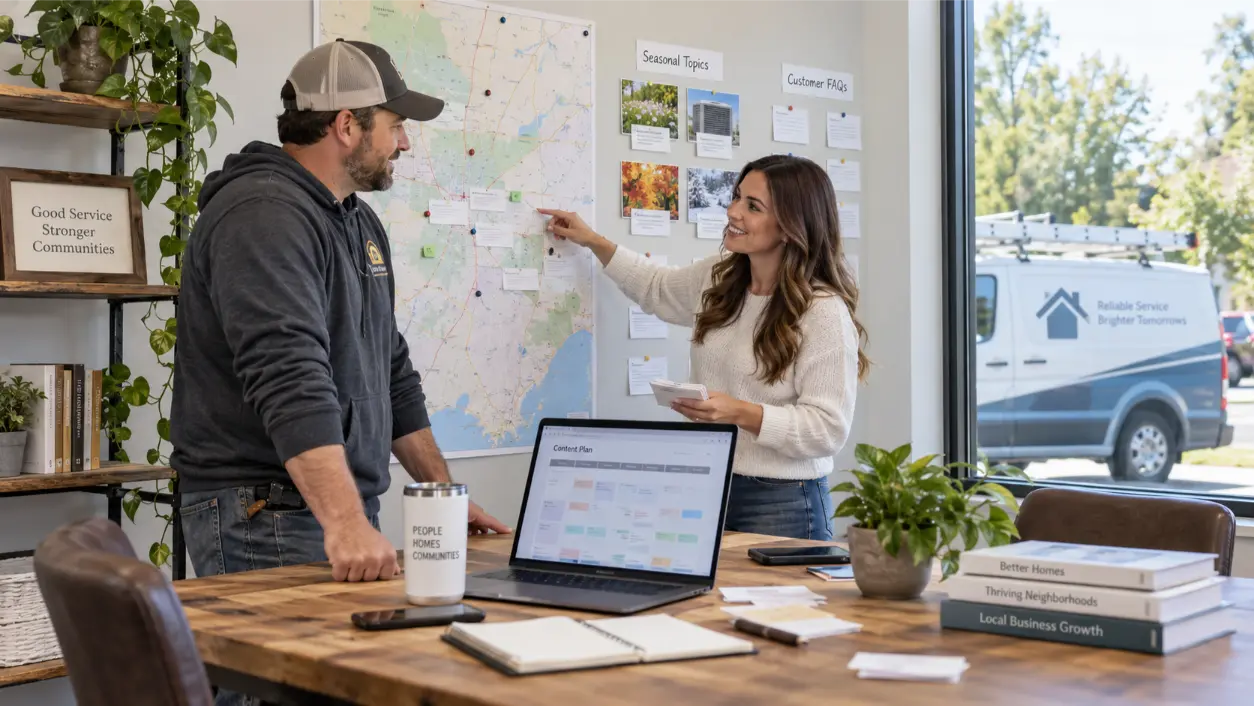

New dealership opening marketing should begin before the ribbon is cut, the lot is full, or the first walk-in arrives. For a multi-rooftop auto group, a new location enters the market with two advantages and one major challenge: the group may already have a recognizable brand, but the new rooftop still has to earn local visibility, local relevance, and a pipeline of nearby shoppers.
The strongest launch plans treat opening day as one milestone inside a 90-day market-entry campaign rather than as a one-week advertising event.
Core Focus Marketing positions its automotive work around putting more buyers on the lot through connected visibility, demand generation, lead capture, retargeting, and follow-up. That framework fits a dealership opening particularly well because the launch requires several channels to become useful at the same time: map visibility, local search, paid search, geo-targeted media, landing pages, audience building, conversion tracking, and a process for turning early interest into appointments.
Why a New Rooftop Needs Its Own Market-Entry Plan
A new dealership location is not simply another campaign for an existing brand. Search engines and customers need to understand where the new store is, when it opens, what it sells, how it differs from other rooftops in the group, and which geographic area it serves. If those signals are inconsistent, the launch can create confusion instead of demand.
A Practical 90-60-30 Day Dealership Launch Timeline
About 90 Days Before Opening: Build the Visibility Foundation
Google currently allows an unopened business to create a Business Profile, set a future opening date, and—after verification—have that profile appear on Google 90 days before opening. That creates an important pre-launch window for a dealership. The profile should be treated as a core launch asset rather than something created after the store opens.
At this stage, verify the dealership name, address, primary category, opening date, phone-routing plan, website destination, and group branding conventions. Avoid publishing temporary data that will immediately need to be replaced unless the change is unavoidable. Consistency between the website, Business Profile, manufacturer or franchise pages, social profiles, major directories, and advertising landing pages reduces ambiguity for both search engines and customers.
The website should also have a dedicated location page or launch landing page. It can explain the new store, service area, opening timing, contact options, and what shoppers can expect without pretending the dealership is fully operational before it is ready.
About 60 Days Before Opening: Start Capturing Demand
Once the core local assets are accurate, shift from pure visibility into demand generation. Search campaigns can target high-intent local queries related to the brand, vehicle categories, trade-ins, financing, and the opening location. Social and display campaigns can introduce the new rooftop to nearby consumers, while retargeting can keep the location visible to people who visited the launch page but did not convert.
At 60 days, the primary conversion may be “Get opening updates,” “Join the priority list,” “Request a call,” “Ask about incoming inventory,” or “Get notified when appointments open.” The exact CTA should match what the dealership can reliably deliver.
About 30 Days Before Opening: Accelerate Appointments
In the final month, the campaign should become more concrete. If inventory feeds, sales staffing, phone routing, CRM workflows, and appointment calendars are ready, shift ads and landing pages toward specific shopper actions. Promote available or incoming inventory only when those listings are accurate. If grand-opening offers are approved, make the eligibility, timing, and limitations clear.
This is also the point to intensify remarketing. Audiences built during the earlier launch phases already know the store is coming. They can now receive stronger appointment-focused messages tied to opening week, trade-in evaluations, test drives, service availability, or other confirmed store capabilities.
Build Local Map Visibility Before the Doors Open
For a physical dealership, map visibility is a major part of discovery because shoppers frequently search with geographic intent. Google’s current Business Profile guidance allows a verified profile to become visible up to 90 days before the future opening date. That gives operators time to establish the new location in Google’s local ecosystem before the first day of business.
The goal is not to guarantee a map-pack position; no agency can responsibly promise that. The goal is to make the store’s local data complete, accurate, and consistent enough to compete when consumers search nearby.
- Use the exact dealership name approved for the physical location.
- Confirm the street address and map pin before campaigns scale.
- Set the future opening date accurately.
- Link the profile to the rooftop-specific page rather than a generic group homepage when possible.
- Use a phone number that will remain valid or can be cleanly routed after opening.
- Add approved photos as the site becomes customer-ready.
- Update regular hours only when the operating schedule is confirmed.

Create a Dedicated Local Landing Page Before You Buy Traffic
A grand-opening campaign is stronger when every channel points to one reliable source of truth. The launch page should answer the basic questions a nearby shopper has without requiring them to search through the main corporate site.
- Where is the dealership located?
- When is it expected to open?
- Which brands, vehicle categories, or services will be available, if confirmed?
- Which surrounding cities or neighborhoods is the location intended to serve?
- How can shoppers ask a question or join the pre-opening list?
- Where will inventory appear once it is available?
The page should be mobile-first, fast, trackable, and built for conversion. Core Focus Marketing describes its broader approach as connecting website performance, visibility, lead capture, and follow-up into one coordinated system. Its connected marketing framework is especially relevant during a location launch because every source of traffic should feed a measurable next step.
Use Geo-Targeted Ads Deliberately
Google Ads allows advertisers to target countries, areas within a country, and radiuses around locations. That makes geographic targeting useful for a new dealership, but it should not be treated as perfectly precise. Google states that location targeting uses multiple signals and is a best-effort system, so campaign results should be reviewed by location rather than assumed to match the targeting settings perfectly.
For a dealership launch, the useful question is not “How wide should the radius be?” in isolation. It is “Where are the likely buyers for this rooftop, and how should those areas be prioritized?” The answer may differ by franchise, inventory mix, metro density, highway access, competing rooftops, and how far existing customers already travel within the dealer group.
A practical structure can separate:
- Primary trade area immediately around the new store.
- Secondary nearby cities and ZIP codes with realistic travel patterns.
- Existing group markets where the new rooftop adds convenience.
- Conquest areas where shoppers currently travel to competing dealerships.
Budget, bids, creative, and landing-page messaging can then be evaluated by geography rather than blended into one broad market average.
Use Search and Geofencing for Different Jobs
Search advertising captures expressed intent, while geofencing and other location-aware media can build awareness among audiences in relevant places. Core Focus Marketing lists mobile geofencing among its current services. For a dealership opening, use the channels for different jobs: awareness first, then search and retargeting to capture shoppers who move into active research. Measure qualified leads, calls, appointments, and showroom outcomes—not impressions alone.
Capture Leads Before Inventory Is Fully Live
A common launch mistake is waiting for a complete vehicle feed before giving interested shoppers a way to convert. If the store can receive and respond to inquiries, early lead capture can begin before every unit is published.
Useful pre-opening conversions can include:
- Opening updates.
- Priority appointment requests.
- Trade-in interest.
- Vehicle-category interest.
- Financing questions, if the dealership has approved pre-opening handling.
- Service-opening notifications, if a service department is part of the launch.
The important operational requirement is follow-up. A pre-opening form that sits unanswered for two weeks can damage trust. The launch team should decide who owns each lead source, how quickly responses are expected, how leads are tagged in the CRM, and when nurturing shifts from “coming soon” communication to appointment scheduling.
Coordinate the Dealer Group Brand With the New Rooftop Identity
Multi-rooftop groups need consistency and local specificity. Use the same approved naming convention across the Business Profile, website, ad accounts, CRM, call tracking, social profiles, inventory feeds, and manufacturer listings. Keep the group brand, but add rooftop-specific signals such as nearby cities, directions, opening information, photos, and local messaging.
Measure Different KPIs at Different Launch Stages
Pre-opening marketing should not be judged only by opening-week sales. The expected action changes as the dealership gets closer to opening.
- Visibility phase: branded/local search presence, map visibility, page traffic, engaged visitors, audience growth.
- Demand-capture phase: lead forms, calls, opening-update signups, trade-in inquiries, retargeting audience growth.
- Appointment phase: appointment requests, qualified calls, inventory inquiries, directions, scheduled visits.
- Opening and post-launch: showroom appointments, sold leads, cost per qualified lead, channel contribution, geographic performance, lead-response time.
Common New-Dealership Launch Mistakes
- Creating the Business Profile only after opening day.
- Sending all traffic to the dealer group’s generic homepage.
- Advertising hours, inventory, or promotions that are not operationally confirmed.
- Using broad geographic targeting without reviewing performance by area.
- Launching lead forms before assigning follow-up ownership.
- Allowing multiple rooftops in the group to compete for the same keywords without a location strategy.
- Judging success only by impressions instead of appointments and qualified actions.
- Changing names, phone numbers, URLs, or location data repeatedly during the launch window.
New Dealership Opening Marketing Checklist
- Confirm the opening date and which details are approved for public release.
- Create and verify the Google Business Profile with the future opening date.
- Build a rooftop-specific landing page with local information and lead capture.
- Set analytics, call tracking, CRM source tagging, and conversion events.
- Define the primary and secondary trade areas.
- Launch local paid search around confirmed dealership capabilities.
- Build awareness through geo-targeted social, display, video, or geofencing where appropriate.
- Retarget engaged visitors as the opening date approaches.
- Transition pre-opening leads into appointment campaigns once operations are ready.
- Review results by geography, channel, lead quality, and appointment outcome after opening.
Frequently Asked Questions
When should marketing start for a new dealership location?
A practical launch plan often begins around 90 days before opening, especially because Google currently allows a verified Business Profile to appear 90 days before the future opening date. The exact paid-media timing should depend on when the dealership can accurately publish location details and respond to leads.
Can a dealership appear on Google Maps before it opens?
Google says an unopened business can create a Business Profile, set a future opening date, and—after verification—have the profile appear 90 days before opening. The profile should use accurate location and opening information.
What should a pre-opening dealership landing page include?
Include the location, expected opening timing, confirmed brands or services, nearby markets served, a clear pre-opening CTA, and a path to inventory or appointments when those become available. Avoid publishing details that are still uncertain.
Should a new dealership use geo-targeted ads?
Geo-targeting can be useful for focusing launch budgets around the primary and secondary trade areas. Google Ads supports city, area, and radius targeting, but Google also states that location targeting is based on multiple signals and is not perfectly accurate. Performance should be reviewed by location and adjusted over time.
What should dealerships measure before opening day?
Useful pre-opening metrics include local visibility, launch-page engagement, calls, lead forms, opening-update signups, trade-in inquiries, appointment interest, audience growth, and response time. After opening, connect those signals to appointments, showroom visits, sales outcomes, and cost per qualified lead.
Build Demand Before the First Sales Meeting
The strongest dealership openings do not wait for opening week to introduce the store to the market. They use the pre-opening window to establish local search visibility, define the trade area, capture high-intent demand, build retargeting audiences, and create a lead-follow-up process that is ready when appointment scheduling begins.
Core Focus Marketing works with automotive dealers and other SMBs using connected website, visibility, advertising, targeting, lead-capture, and follow-up strategies. Multi-rooftop operators preparing a new location can review Core Focus Marketing’s growth approach and schedule a consultation to map the launch around the opening date, local market, and actual dealership readiness.
Marketing and advertising disclaimer: This article provides general educational information and is not a guarantee of search rankings, map placement, advertising performance, lead volume, appointments, sales, or return on investment. Platform rules, verification requirements, targeting options, dealership advertising obligations, inventory availability, and local market conditions can change. Confirm current platform policies and dealership-specific compliance requirements before launching campaigns.
RELATED LINK: Federal Trade Commission — Automobile Dealer Business Guidance