
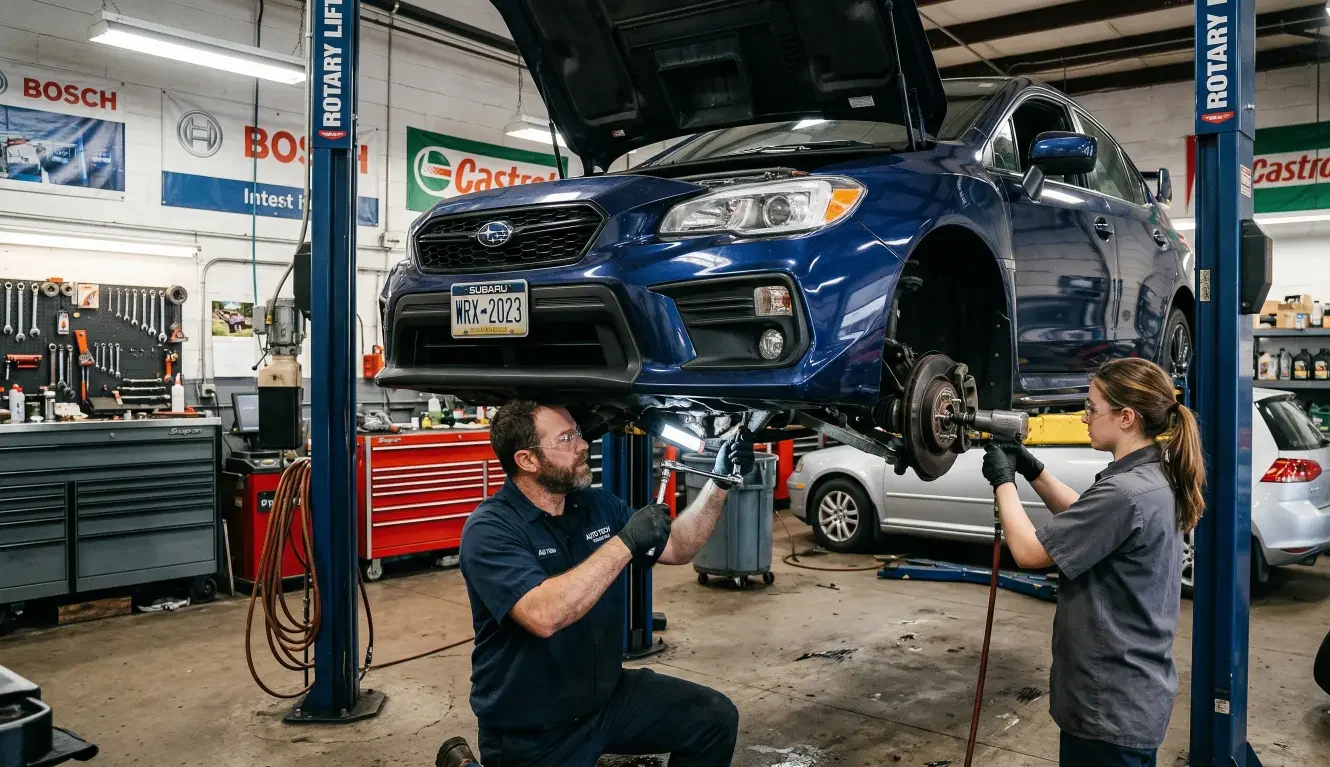
For many dealerships, the service lane follows a familiar pattern. Newer vehicles come in regularly while warranty coverage is active, appointment schedules stay healthy, and RO count feels relatively stable. Then the warranty-heavy traffic begins to taper off. The same customers start spacing out visits, some disappear entirely, and the service department starts feeling the change before anyone says it out loud.
That is usually when the pressure starts to build.
Advisors notice more gaps in the schedule. Fixed ops leaders start looking harder at appointment volume. Service specials get pushed more aggressively. Reminder emails go out, but the response feels inconsistent. The department is still staffed, the local car population is still there, and the need for maintenance has not vanished. Yet the flow of service work is no longer arriving as predictably as it did before.
This is where dealership service marketing becomes much more than a background support function. Once warranty-driven visits decline, service traffic has to be earned more deliberately. The department needs stronger retention, better visibility, and a clearer reason for local drivers to choose the dealership instead of waiting, forgetting, or drifting toward an independent shop.
The good news is that a declining RO count does not automatically mean demand is gone. More often, it means the department’s marketing needs to adapt to a different stage of the customer relationship. The tactics that worked when service demand was partially built into ownership may not be enough once customers need a stronger reminder, a clearer value proposition, and an easier path back into the lane.
Why Service Department Marketing Changes After Warranty Visits Decline
Warranty traffic creates a kind of built-in momentum.
When vehicles are newer, customers tend to have a stronger reason to stay connected to the dealership. They may assume the dealership is the default service destination. They may be more cautious about where they go. They may also be receiving more structured prompts tied to ownership, maintenance, and brand communication.
As those vehicles age, that default behavior weakens.
Some customers become less disciplined about routine maintenance. Some begin comparing price more actively. Others simply stop thinking of the dealership first. This does not always happen because they had a bad experience. In many cases, they just become easier to lose. Once the automatic pull of early ownership fades, the dealership has to do more to remain top of mind.
That shift has a direct effect on RO count.
Fewer returning customers means fewer routine services. Fewer routine services mean fewer opportunities for inspections, upsells, follow-up work, and future retention. What may start as a small decline in basic maintenance traffic can gradually affect the entire fixed ops pipeline.
This is why service department marketing has to change after warranty traffic slows. The department is no longer supported by the same built-in visit pattern. It has to create relevance again through reminder cadence, service positioning, convenience messaging, and local visibility.
The department is not just filling open appointment slots. It is rebuilding reasons to return.
The First Sign of Trouble: When RO Count Begins to Slide
Most service managers do not need a report to sense when the trend has started.
They see it in smaller signals first. Fewer inbound appointment calls. Fewer online bookings on certain days. More open space in the advisor schedule. Less steady movement in the lane. The numbers may not look catastrophic at first, but the rhythm feels different.
That matters because these early signs are often mistaken for a temporary lull.
A manager may assume the slowdown is seasonal. A team may expect traffic to bounce back after the next promotional push. The department might run a quick service special and hope that the problem resolves on its own. Sometimes that works briefly, but it does not always solve the deeper issue.
When RO count begins to slide after a warranty wave ends, the problem is usually structural.
The dealership has lost some of the passive retention it once had, but its marketing still may be acting as if those visits will return automatically. That creates a gap between how the department used to generate traffic and how it now needs to generate traffic.
This is also where advisor pressure increases. Advisors are still expected to keep schedules full and maintain productivity, but they are working with a weaker flow of returning service customers. Without better marketing support, the department can end up asking frontline staff to solve a visibility and retention problem on their own.
Recognizing the decline early is important because it changes the response. Instead of treating the situation as a short-term dip, the service department can start asking a better question: what changed in customer behavior, and what does our marketing need to do differently now?
Diagnosis: Why Customers Stop Returning to the Dealership for Service
When service retention drops, the first instinct is often to assume the issue is price. Price does play a role for some customers, but it is rarely the only reason people stop returning.
In practice, several factors tend to work together.
One common issue is price perception. A driver may assume the dealership is more expensive, even if they have not compared current offers or considered the overall value. Once warranty visits end, that assumption can become a reason to look elsewhere.
Another issue is weak reminder communication. Customers are busy. They miss intervals. They postpone routine work. If the dealership only reaches out occasionally, it becomes easy for service to slip down the priority list until a different provider becomes more convenient or more visible.
Convenience assumptions also matter. Some vehicle owners believe an independent shop will be faster, closer, or easier to deal with. Whether or not that is always true, the perception itself affects behavior. If the dealership does not actively communicate ease of scheduling, turnaround expectations, amenities, or pickup and drop-off options where applicable, it may lose customers without ever directly competing for them.
There is also the problem of generic service messaging. When every offer looks like a standard oil change coupon or a basic seasonal promotion, nothing stands out. Customers stop noticing the difference between one provider and another.
The important point is that lost service traffic usually comes from drift, not one dramatic event. Customers do not always make a strong decision to leave. They simply stop being reminded, stop feeling connected, and stop seeing a compelling reason to come back.
That is why diagnosing the problem correctly matters. If the dealership assumes the answer is only “discount more,” it may miss the bigger retention issues underneath.
The Contrarian Reality: Discounts Are Not the Only Way to Bring Customers Back
When RO count softens, discounting is often the first lever dealerships pull.
That response is understandable. Service specials are quick to launch, easy to communicate, and familiar to the team. A discount can create a short-term bump, especially for routine maintenance offers. But discounting alone rarely builds stable retention, and over time it can train customers to wait for the next promotion instead of returning consistently.
That is the contrarian reality service leaders need to keep in view: price is not the only reason customers choose where to service their vehicle.
Messaging matters. Convenience matters. Reminder timing matters. Clarity matters. Visibility matters.
A customer deciding where to book an oil change or routine maintenance visit is not always asking only, “Where is it cheapest?” They may also be asking:
- Who made it easiest to schedule?
- Who reminded me at the right time?
- Who feels reliable?
- Who seems familiar with my vehicle history?
- Who is nearby and easy to find?
- Who made the service experience feel simple?
This is where service specials marketing without discounting becomes especially relevant. A strong offer can be built around value framing rather than price cutting. That could mean emphasizing trained technicians, convenient appointment scheduling, service history familiarity, multi-point inspections, quicker booking flow, or seasonal readiness.
Discounts may still have a place. The issue is not whether to use them at all. The issue is whether the department has anything else to say.
If every campaign depends on lowering price, the dealership becomes easier to compare and easier to ignore. If the department can communicate trust, convenience, timing, and relevance, it builds a stronger case for return service even when the offer is not the cheapest one in the market.
Breakdown #1: Service Offers That Do Not Stand Out
A lot of service marketing blends together.
Drivers see oil change ads, tire rotation offers, brake specials, seasonal checkups, and coupon language from multiple providers. If the dealership’s offer looks and sounds like every other service ad in the market, it becomes harder to remember and easier to skip.
This is where many service department marketing ideas fall flat. The department may be promoting a real service need, but the framing does not give the customer a compelling reason to act now or to choose the dealership specifically.
Take a basic oil change promotion. On its own, it is easy to ignore. But the same service can be framed differently depending on what the customer actually cares about. One driver may respond to convenience. Another may respond to preventive care. Another may simply need a reminder that the interval is approaching and scheduling is easy.
That means the offer itself should do more than announce a service.
It should answer practical questions such as:
- Why now?
- Why here?
- What makes this easy?
- What makes this relevant to my vehicle or season?
- What makes this feel more trustworthy than a generic service ad?
For example, an oil change marketing strategy dealer teams use effectively might emphasize quick scheduling, factory-trained service familiarity, bundled maintenance checks, or seasonal readiness rather than leading with a discount alone.
The same principle applies to broader maintenance campaigns. If the wording is too generic, the message gets lost. If it is framed around timing, convenience, and value, it has a better chance of driving action.
Breakdown #2: Weak Reminder and Retention Cadence
Many dealerships do communicate with past service customers. The problem is not always whether reminders exist. The problem is whether the cadence is strong enough, consistent enough, and relevant enough to keep people returning.
A weak cadence creates avoidable drop-off.
Customers may receive one reminder, miss it, and hear nothing again for months. Or the reminders may be too broad to feel timely. Or they may arrive only when the dealership wants to fill appointments, instead of when the customer is actually approaching a meaningful maintenance moment.
A stronger approach is not necessarily louder. It is better timed.
Maintenance interval reminders
Maintenance interval reminders are one of the most practical ways to support retention because they align marketing with a real service need. Instead of waiting for a customer to remember, the dealership can show up around expected mileage or service timing with a clear and useful prompt.
The message does not need to be elaborate. It needs to feel relevant. A reminder tied to an expected interval, paired with an easy scheduling path, can do more than a generic blast email sent to everyone at once.
This is one of the simplest ways to increase service appointments dealership teams often overlook. The goal is not to flood inboxes. It is to reduce forgetfulness and friction.
Seasonal service campaigns
Seasonal campaigns work best when they are tied to actual driving conditions or calendar moments customers already understand. Tire-related service, battery checks, road-trip readiness, heat or cold weather preparation, and similar themes can all help bring routine maintenance back into focus.
The mistake is making every seasonal campaign sound interchangeable.
If the dealership wants these campaigns to matter, it helps to connect them to a clear reason for action and an easy next step. What should the customer do now? Why is this worth scheduling before the season fully changes? Why is the dealership a convenient option?
Done well, seasonal campaigns give the service department a reason to re-enter the customer’s attention naturally rather than only when a discount is available.
Customer retention messaging
Retention messaging should not always sound like a sale.
Sometimes the most effective communication simply reinforces familiarity and trust. It reminds customers that the dealership is still there, still ready, and still easy to book with. It positions service as part of ongoing vehicle care, not just a reaction to problems.
Fixed ops retention campaigns tend to work better when they are paced over time, tied to real ownership moments, and built around the customer relationship rather than isolated promotions.
Breakdown #3: Missing Local Search Visibility for Service Intent
Even loyal past customers are not the only audience that matters. Once warranty-driven habits weaken, the dealership also needs to compete more deliberately for local service intent.
Many drivers search online when they need maintenance, quick service, or repair options nearby. If the dealership is not visible enough when that search happens, it misses a critical chance to win appointments from both past customers and local vehicle owners who may be open to switching.
This is where local visibility becomes part of dealership service marketing.
A service department can lose traffic simply because its online presence does not make the path to booking obvious. Sometimes the dealership has a strong sales-side web presence but underdeveloped service pages. Sometimes service information is buried. Sometimes the appointment path is harder than it should be. Sometimes the site ranks poorly for the kinds of local intent searches drivers actually use.
That is why service pages matter. Appointment landing pages matter. Local SEO matters.
If a customer searches for routine maintenance, brake service, tire service, oil change, or a brand-specific service need in the local area, the dealership should have clear, useful pages that match those intents and support easy booking.
This is not just about rankings. It is also about confidence.
A well-structured service page tells the customer:
- yes, this dealership handles this service
- yes, scheduling is straightforward
- yes, this is a relevant local option
- yes, there is a clear next step
Without that visibility, the department may be relying too heavily on reminders alone. Strong local search presence supports both retention and acquisition by helping the dealership show up when service need becomes active.
Practical Marketing Strategies to Increase Service Appointments
Once the department understands where the drop-offs are happening, the next step is to build a more stable system. The goal is not to chase random spikes. It is to create repeatable marketing support that brings customers back with more consistency.
Maintenance reminder campaigns
Start with reminders tied to real intervals and real ownership patterns. If customers are due or nearly due for routine maintenance, the dealership should not rely on them to remember independently.
These campaigns should be simple, timely, and easy to act on. Clear subject lines, clear booking prompts, and a visible service scheduling link can go a long way. This is often one of the highest-priority fixes because it reconnects the department with people who already know the dealership.
Oil change marketing strategies that emphasize convenience
Oil changes are common, but that does not mean they should be marketed generically.
Instead of defaulting to a basic special every time, emphasize convenience. Highlight easy online scheduling, trusted technicians, efficient service flow, or the ability to pair routine maintenance with inspections or other needed work. Convenience is often a stronger differentiator than a small discount.
This is one of the more practical service department marketing ideas because it reframes a common service into a clearer reason to return.
Retention campaigns for past service customers
Past customers are often the most overlooked source of future RO count. They already have history with the dealership, which means the relationship is not starting from zero.
Retention campaigns can reconnect these customers through maintenance prompts, seasonal messages, service reminders, and value-focused communication that keeps the dealership present after the warranty period fades. The more structured the cadence, the less likely the department is to disappear from the customer’s mind.
Local intent advertising for drivers searching service
The department should also support customers who are actively looking for service nearby. Search-driven campaigns, service-specific landing pages, and local visibility strategies can help the dealership compete when demand is immediate.
This is especially helpful when the department wants to bring in both returning and new service customers from the surrounding area. Local intent marketing works best when the message is tightly connected to service need and the booking path is easy to follow.
Together, these strategies help increase service appointments dealership teams need without relying entirely on constant discounting.
How Service Managers Can Track Whether Marketing Is Improving RO Count
If the department is trying to fix a post-warranty traffic decline, it helps to measure more than just the final RO total.
RO count remains important, but the earlier indicators tell the team whether the marketing system is improving before the full financial result shows up.
Start with appointment requests. Are more people booking online, calling in, or responding to maintenance outreach?
Then look at returning service customers. Are previously inactive customers coming back? Are interval-based reminders leading to more repeat visits?
Maintenance interval compliance can also be useful. If more customers are returning closer to expected service timing instead of drifting far past it, that is a sign the reminder and retention system is becoming more effective.
Advisor schedule utilization matters too. If schedules are becoming steadier and less dependent on last-minute fill-ins, the department may be moving toward a healthier service flow.
The key is to monitor the full path:
- marketing visibility
- appointment response
- return visits
- schedule stability
- RO count trend
That gives service managers a more realistic view of whether changes are working. It also helps the department avoid overreacting to one slow week or one strong promotion.
Building a Stable Fixed Ops Pipeline Beyond Warranty Visits
When warranty traffic slows, the service department has to shift from passive demand to more intentional retention and acquisition. That does not mean the department needs to reinvent itself. It means it needs a stronger system for staying visible, staying relevant, and staying easy to book.
The dealerships that handle this transition best usually do a few things well. They remind customers consistently. They frame offers around value and convenience, not just price. They strengthen local search visibility for service intent. And they treat retention as an ongoing process rather than a one-time campaign.
That is what builds a more stable fixed ops pipeline.
Instead of depending on the natural momentum of newer vehicle ownership, the department creates a new rhythm. Customers hear from the dealership at the right times. They see reasons to return. They find the service department easily when they search. And they get a clear path from reminder to appointment.
That kind of consistency matters more after the warranty wave ends. It helps protect advisor productivity, supports bay utilization, and gives the department a better chance of maintaining healthy RO count over time.
If your dealership’s service department is seeing RO count decline after the warranty wave ends, the right marketing strategy can help bring vehicles back into the service lane. A consultation can identify gaps in your current service marketing approach and outline ways to increase appointment demand and retention.
Schedule a consultation to explore how targeted marketing strategies can support your service department’s growth.
FAQ Content
Why does RO count often drop after warranty traffic slows?
Many dealerships see service visits decline after warranty-related habits weaken. Customers may service less consistently, compare alternatives more often, or stop viewing the dealership as the default option unless the department stays visible and relevant.
How can a dealership increase service appointments without relying only on discounts?
A stronger approach usually combines maintenance reminders, retention messaging, convenience-focused offers, and local search visibility. Discounts can help in some cases, but they are not the only lever that influences return visits.
What are effective service department marketing ideas for fixed ops teams?
Practical ideas include interval-based reminder campaigns, seasonal service messaging, oil change campaigns framed around convenience, local service landing pages, and retention outreach to past service customers.
What makes an oil change marketing strategy work for a dealer?
The strongest oil change campaigns usually make the service feel easy and relevant. Clear timing, simple scheduling, trusted service positioning, and a convenient customer experience often matter more than a generic coupon by itself.
Why is local search visibility important for dealership service marketing?
Many drivers search online when they need nearby service. If the dealership’s service pages and appointment paths are not easy to find, the department can lose both returning and local customers at the moment service intent becomes active.
What should service managers track besides RO count?
It helps to watch appointment requests, returning service customers, maintenance interval response, and advisor schedule utilization. These earlier signals can show whether service marketing is improving before long-term RO trends fully develop.
Schedule a Marketing Consultation
If your dealership’s service department is seeing RO count decline after the warranty wave ends, the right marketing strategy can help bring vehicles back into the service lane.
A consultation can identify gaps in your current service marketing approach and outline ways to increase appointment demand and retention.
Schedule a consultation to explore how targeted marketing strategies can support your service department’s growth.
RELATED LINKS:
NHTSA — summer driving safety / preventive maintenance guidance