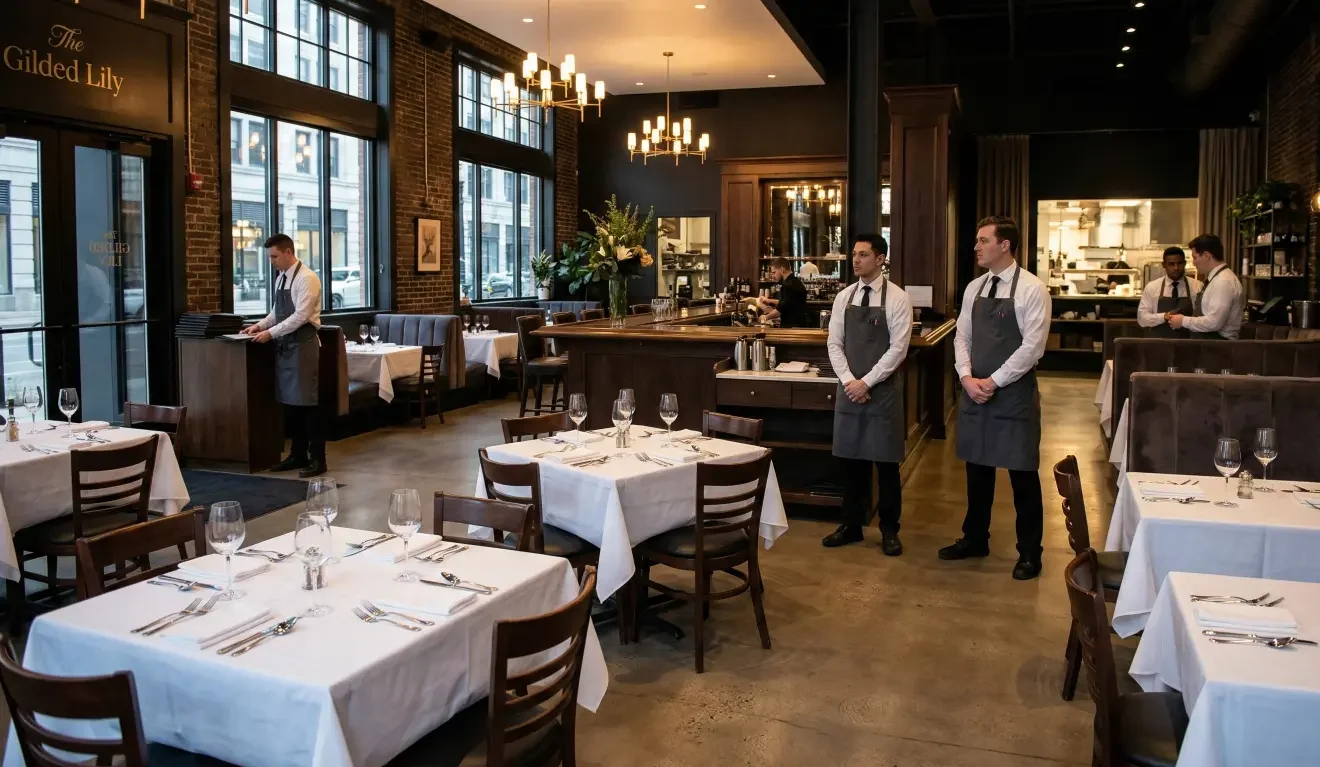
It’s a weird feeling: your Google rating looks great, customers say nice things, and yet the room feels quiet—especially on nights that used to be packed. When traffic drops like this, the issue usually isn’t “quality.” It’s discoverability, timing, and motivation—people aren’t seeing you at the right moment, or they don’t have a clear reason to choose you tonight.
You need to take care of your restaurant traffic down problem.
This is fixable. Not with louder posting, not with a desperate discount spiral, and not with a one-time gimmick that burns out your team. The reset is about turning your reputation into demand by diagnosing where the drop is happening—being seen, being chosen, or being remembered—then making a few tight changes that stack together.
What’s really happening when reviews are high but seats are empty
Good reviews are a trust signal. They tell strangers, “This place is legit.” But trust isn’t the same thing as demand.
Demand comes from three other forces working at the same time:
- Being seen: People can only choose you if you show up when they’re searching—especially in map results and “near me” moments.
- Being chosen: Even if you show up, they need a fast, clear reason to pick you over the default choices.
- Being remembered: Even if they love you, life moves on. If you don’t give them a reason and a route back, they don’t return soon.
When a dining room is empty despite strong ratings, one (or more) of these three points is failing. The goal is not to “market more.” It’s to locate the break and fix the right thing first.
A common pattern looks like this:
- You’re still loved by the people who come.
- Your reviews still reflect that love.
- But fewer new people are discovering you, or fewer people feel compelled to visit right now, or fewer past guests are returning on a predictable rhythm.
The fix is not complicated—but it does require priorities.
Step 1: Diagnose whether it’s a visibility problem or a motivation problem
Before you change everything, do a quick diagnostic this week. You’re looking for one answer: are fewer people seeing you, or are they seeing you and not choosing you?
Here are simple “yes/no” checks:
- Are you getting fewer calls, direction requests, or reservation inquiries than usual?
If yes, it’s often visibility or seasonality. If no, it may be conversion (people see you but don’t act). - Are you showing up when you search like a customer?
Try searches you’d expect diners to use: “best [cuisine] near me,” “dinner near me,” “[cuisine] [neighborhood],” “brunch near me,” “late night food.” If you don’t appear consistently, reviews can’t do their job. - When you do show up, is it instantly clear why someone should pick you tonight?
If your listing and website don’t quickly answer “what is this place, what’s the vibe, what do people love, and can I go now?” you’ll get scrolled past. - Is your traffic down in specific dayparts or across everything?
If it’s just weekday dinner, your “reason to go now” might be missing. If it’s everything, visibility and awareness may have dropped.
You’re not trying to be perfect here. You’re trying to identify the highest-probability cause so you stop burning energy on the wrong fixes.
If you’re not showing up on local searches, your reviews can’t help you
If you’re not appearing in the places people decide, it doesn’t matter how high your rating is. The problem isn’t reputation—it’s reach.
That usually points to local presence issues: incomplete listing details, weak photos, unclear categories, inconsistent hours, missing menu links, or simply a lack of signals that help platforms understand what you are and when you’re relevant.
Even if you “have a profile,” it may not be doing the job. In a slow season, the restaurants that win are often the ones that are easiest to understand and easiest to choose at a glance.
If you are showing up but people aren’t choosing you, your message or offer is unclear
If you do show up but the dining room stays empty, the issue shifts from being seen to being chosen.
That often comes down to:
- Your photos don’t match what diners want (or they feel dated)
- Your vibe is unclear (date night? family? casual? bar-forward?)
- Your menu isn’t accessible quickly
- There’s no immediate “reason to go now”
- Your pricing/value framing is confusing
- Your website or reservation path adds friction
This is where owners often “post more” and wonder why nothing changes. More posts don’t fix unclear positioning.
Step 2: Fix the “near me” moment—where restaurant decisions actually happen
Most restaurant decisions happen fast. People are hungry, they’re tired, they’re with someone, or they’re trying to avoid debate. They open a map app or a search result and make a choice in a minute.
In that moment, your job is to make yourself easy to understand and easy to choose.
Here’s what “easy” looks like:
- Accurate hours, including holiday exceptions
Nothing kills trust faster than showing up to a closed door or seeing “hours may differ.” - Clear category and identity
Not just “Restaurant.” Something specific enough that you show up for the right searches. - Photos that sell reality, not fantasy
Diners want to see the dining room vibe, the food they’ll actually order, and what it feels like on a normal night. If your photos are mostly logos, old plates, or dim shots, you’re making the decision harder. - Menu access that doesn’t fight the customer
If your menu is hard to find, hard to read on mobile, or out of date, people bail and pick the default choice. - Decision shortcuts
People want answers to practical questions: parking, seating style, kid-friendly, bar seating, outdoor seating, reservations vs walk-ins, wait times, takeout reliability.
A simple way to think about this is: you’re not trying to “rank.” You’re trying to remove friction from a real human decision.
If your reputation is strong, your near-me presence should amplify it:
- Show your best-loved dishes clearly.
- Reflect your actual strengths (service, atmosphere, signature items).
- Make the path from discovery to visit simple: call, directions, reservation, order.
When those basics are tight, your reviews have room to influence the choice instead of being buried under uncertainty.
Step 3: Create a reason to visit now without cheapening your brand
A strong restaurant doesn’t need constant discounts. But it does need urgency—a reason someone picks you tonight, not “sometime.”
That reason can be value-forward without being bargain-forward.
Here are “reason-to-go” ideas that work across restaurant types because they give people a decision trigger:
Offers that don’t feel like desperation
- Prix fixe night (e.g., a set menu that feels curated, not discounted)
Great for date-night or chef-driven concepts. - Chef’s special window
A limited-time feature that creates urgency without lowering price: “This week only,” “Weekend feature,” “While it lasts.” - Pairing night (beer, wine, mocktail pairing)
Works well if you can make it simple and repeatable. - Family bundle with a clear promise
Not a cheap deal—an easy decision: “Dinner solved.” - Reservation perk
A small added value for booking ahead: a shared starter, a house-made dessert, a tasting flight. Keep it simple and consistent. - Local tie-in
A pre-show menu, game-day special, or neighborhood collaboration that matches your identity.
The difference between an offer that builds demand and one that erodes brand is tone and clarity. The best offers feel like you’re inviting people into something, not begging them to come.
Examples you can adapt quickly
- “Two-course date night menu every Thursday”
- “Chef’s weekend feature: limited run”
- “Late-night menu after 9pm”
- “Lunch express: quick, consistent, easy”
- “Family night: kid-friendly set + fast service”
- “Industry night: a thank-you that fits your brand”
- “Seasonal tasting: short menu, big personality”
What to avoid: confusing promos, constant coupons, bait-and-switch fine print
If people feel tricked, your reviews stop being an asset.
Avoid:
- Complicated terms that frustrate staff and guests
- “Up to” language that feels slippery
- Promos that apply only to a tiny corner of the menu
- Discounts that change weekly with no rhythm
A good rule: if your staff can’t explain it in one sentence, it’s too complicated.
Step 4: Use event tie-ins that fit your identity (and are easy to repeat)
Events can bring traffic back—but only when they match your concept and are run with a simple rhythm.
If your restaurant is family-forward, a late-night DJ set won’t help. If you’re an upscale dining room, a chaotic trivia night may hurt more than it helps.
The goal is not to “do events.” The goal is to create a repeatable reason that becomes a habit for customers.
Event formats by restaurant type (examples)
- Family-friendly concepts:
Kids-eat-easier nights, early seating perks, themed family dinners, simple community partnerships - Date-night and upscale:
Prix fixe nights, pairing dinners, chef’s table experiences, seasonal tasting events - Bar-forward / social concepts:
Live acoustic sets, game-day watch parties, cocktail feature nights, themed nights that match your crowd - Fast casual:
Limited-time menu drops, community fundraisers, collaboration specials, predictable weekly features
The best events are easy to remember and easy to run. Think “every first Friday” or “every Thursday.” Rhythm beats novelty.
A promotion rhythm that actually gets people in the door
Many restaurant events fail because they’re promoted once and then forgotten. A simple rhythm prevents that:
- Announce (early enough to plan)
- Remind (the day before and day-of)
- Last-call (a short, clear “tonight” message)
- Recap (photos and social proof that makes the next one easier)
- Next date (immediately seed the next one)
This makes your marketing feel alive without overwhelming your team.
The contrarian moment: great reviews don’t automatically create urgency
Here’s the misconception that traps good restaurants:
“If people love us, they’ll come back soon.”
Sometimes they do. Often they don’t—because life is busy and restaurants are competing with convenience. Great reviews create confidence, not urgency. People still need:
- Timing (when they’re hungry and deciding)
- A trigger (why tonight)
- Convenience (easy to choose and easy to act)
- A reminder (so you’re top-of-mind)
That’s why your dining room can be empty while your reviews stay high. Your reputation is doing its job—when people see it. The missing piece is the decision trigger.
The reset is not about convincing people you’re good. Your reviews already do that. It’s about making the decision easy and timely.
Common mistakes that keep restaurants stuck in the “slow month” loop
When traffic is down, owners often do a lot—and get tired without seeing change. These are the mistakes that keep the loop going.
Random posting with no call-to-action
Posting “great food” photos without a reason to act is like putting up a billboard with no address. Every piece of content should answer: why should someone come now?
A simple improvement is to add one clear, human CTA:
- “Tonight: chef’s feature”
- “This week: prix fixe menu”
- “Reservations open for Friday”
- “Walk-ins welcome after 8”
Not hype. Just clarity.
Over-discounting and training customers to wait
Discounts can work, but constant discounts train customers to wait for a deal. Then your “normal” pricing feels like a penalty.
If you need a value lever, consider:
- Bundles
- Set menus
- Added-value perks
- Limited-run features
- Loyalty-like incentives for repeat visits
The goal is to build a habit, not a coupon dependency.
Not converting happy guests into repeat visits
Your best marketing asset is the guest who had a great experience last month—and then forgot to come back.
Retention can be simple:
- A reason to return (weekly feature, monthly event)
- A reminder path (light email or text list, social follow prompts, community presence)
- A staff habit (table touch question: “Is this your first time?” “How did you hear about us?”)
Even if you don’t run a formal loyalty program, you can build a loyalty loop through consistent rhythm and remembered guests.
Proof posture: how to tell if your fixes are working (without fancy dashboards)
You don’t need complex reporting to know if your reset is moving in the right direction. You need a few weekly signals and a simple habit of learning from real guests.
Here’s what to track consistently:
- Calls and direction requests (a proxy for intent)
- Reservations and walk-in volume by daypart
- Offer redemptions (how many people respond to your reason-to-go)
- Repeat visits (staff notes, POS patterns if available, or simple observation)
- Day-of spikes around events and features
Even more valuable than numbers: direct guest feedback.
Simple “table touch” questions that reveal what’s driving traffic
Ask one question at the table or at checkout:
- “How did you hear about us?”
- “What made you pick us tonight?”
- “Was it the feature/event, or were you already planning to come?”
Do it consistently for a week. You’ll learn quickly whether you’re being discovered, or being chosen, or being remembered.
When to adjust vs when to stay the course
A common mistake is changing too fast. Give your reset enough time to show signals.
Adjust when:
- You’re visible, but your offer isn’t motivating
- People mention confusion about menu, hours, or vibe
- Events are happening but not filling seats
Stay the course when:
- Direction requests and calls rise
- You notice new faces and hear “we saw you on maps”
- Your recurring feature starts to develop regulars
The best marketing is boring in the best way: repeatable, measurable, and calm.
A simple 30-day marketing reset plan for restaurants
This plan is designed to be realistic for an owner-operator or GM who already has too much to do. The goal is momentum without burnout.
Week 1: Tighten visibility and decision clarity
- Update your local presence basics: hours, categories, menu access, fresh photos
- Make your best-loved dishes obvious (the “what should I order” problem)
- Add practical decision cues: parking, seating, reservations, walk-in flow
- Choose one primary story: what you’re known for (not everything)
Owner/GM role: approve the message and photos, assign someone to keep details current.
Staff role: start asking “how did you hear about us?” consistently.
Week 2: Launch one “reason to go now” that fits your brand
- Pick one offer or feature that creates urgency without discounting everything
- Make it simple enough to repeat weekly
- Train staff on a one-sentence explanation
- Promote with clarity: what it is, when it happens, how to get it
Owner/GM role: choose the offer and commit to the schedule.
Staff role: mention it naturally to guests: “Just so you know, Thursdays are…”
Week 3: Add a repeatable event tie-in (or seasonal rhythm)
- Choose an event format that matches your concept
- Promote using the announce/remind/last-call/recap rhythm
- Capture a few photos and short clips so you can reuse them next time
- Keep the experience consistent so word-of-mouth builds
Owner/GM role: keep it operationally simple; don’t overbuild.
Staff role: encourage guests to come back next time: “We do this every…”
Week 4: Build the “remembered” loop
- Make it easy for guests to reconnect (follow prompts, light list sign-up, consistent schedule)
- Share recaps and social proof that feels real (not staged)
- Ask returning guests what brought them back and reinforce it
- Decide what you’re keeping as your core rhythm next month
Owner/GM role: lock the rhythm into a calendar.
Staff role: create a habit of inviting return visits without pressure.
In 30 days, your goal is not perfection. It’s a system: visibility + reason-to-go + rhythm + retention.
Get a local visibility + offer strategy audit
If your reviews are strong but tables are empty, you don’t need louder marketing—you need the right diagnosis and a better “reason to go” this week. We’ll audit your local visibility, your messaging, and your offers, then outline a simple 30-day reset plan you can actually run. No hype—just practical fixes aligned to your restaurant.
FAQ
1) Why is my restaurant slow even though reviews are good?
Good reviews build trust, but they don’t guarantee people will see you at the right moment or feel a clear reason to visit now. Traffic often drops because of visibility issues (you’re not showing up consistently in local searches), motivation issues (your offer or message isn’t compelling), or retention issues (past guests aren’t being prompted to return).
2) What should I change first: ads, offers, or Google Business Profile?
Start with the basics that affect every decision: your local presence and “near me” clarity. If people can’t quickly understand who you are, what you serve, and how to visit, ads and offers won’t work as well. Once visibility is solid, add a simple reason-to-go and then decide if paid promotion is needed.
3) How do I increase foot traffic without discounting?
Create urgency with value, not coupons: prix fixe nights, limited-time chef features, pairing nights, family bundles, reservation perks, or predictable weekly themes. The key is making it easy to remember and easy to act on, without constant price cuts.
4) What are good promotions for a slow month at a restaurant?
Pick one offer you can run consistently and one event rhythm that matches your concept. Examples include a weekly prix fixe, a chef feature weekend, a late-night menu, or a monthly tasting. The best slow-month promotions are simple to explain, simple to execute, and repeatable.
5) Do local ads work for restaurants, or is it mostly word-of-mouth?
Ads can help when your listing and offer are already strong—because they amplify something clear and attractive. But if your local presence is weak or your “reason to go now” is unclear, ads may just send more people to a confusing experience. Word-of-mouth remains powerful, and ads can support it when fundamentals are in place.
6) How do I bring diners back after a slow season?
Rebuild rhythm and reminders: tighten local visibility, launch a repeatable weekly feature, add an event that fits your identity, and create a consistent invitation for people to return. Focus on being seen, being chosen, and being remembered—especially by guests who already liked you.
Request a Restaurant Visibility + Offer Audit
If your reviews are strong but tables are empty, you don’t need louder marketing—you need the right diagnosis and a better “reason to go” this week. We’ll audit your local visibility, your messaging, and your offers, then outline a simple 30-day reset plan you can actually run. No hype—just practical fixes aligned to your restaurant.